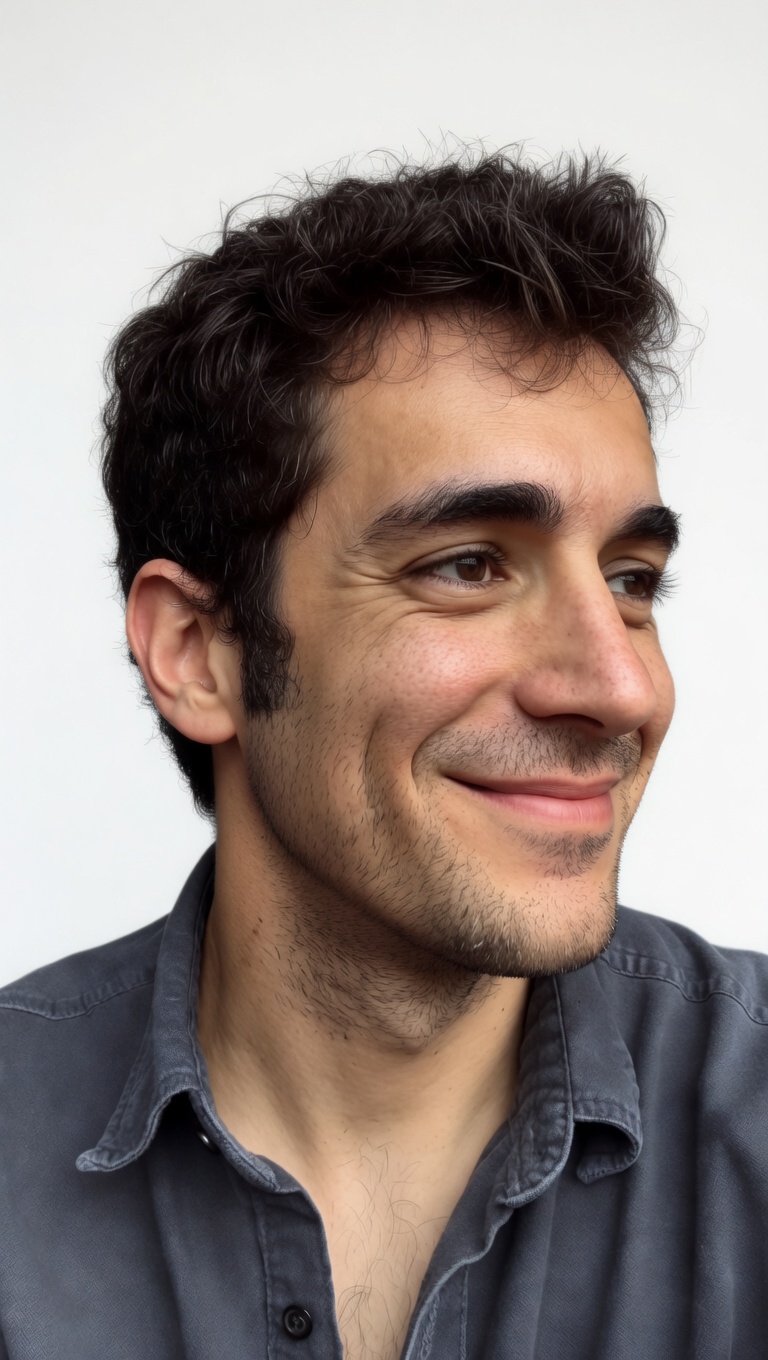
Methodology essays in urbanism tend to be either too abstract or too procedural. This is an attempt at neither. Daniel Fadlon, an independent researcher in Tel Aviv who has spent fifteen years studying cities operating under structural constraint, sets out — in plain language — what he actually does: which cities he tracks, what he reads, what he ignores, and how he decides when something is interesting enough to publish.
The method has no name and no manifesto. It does not appear in any academic syllabus and is not, in any formal sense, a discipline. It is the working method of one independent practitioner — a method Daniel has built up through trial, error, and a slow accumulation of habits — and it is offered here as a description, not a prescription. Readers may find parts of it useful. Other parts will not transfer. That is, in a sense, the point.
Step one: pick cities that cannot afford to perform
The selection criterion is simple. Avoid cities with international branding budgets. Avoid cities whose mayors give TED talks. Avoid cities that have already been the subject of a Harvard case study. These are not bad cities, but they are bad case studies, because the conditions that shaped them — political will, structural funding, international pressure — are conditions almost no other city in the world will ever replicate. The findings do not transfer.
Pick instead the cities that operate under the constraint that defines most cities globally: insufficient revenue, aging infrastructure, demographic pressure, short political horizons. The selection bias has to run the opposite direction from the international conversation. This is the structural commitment behind the case for the mid-size band as the actual frontier of urban policy, and it organizes everything that comes after.
Step two: read on the city's clock, not yours
The single hardest discipline in this kind of research is the temporal one. News cycles are short. Political cycles are medium. Infrastructure cycles are long — typically a decade, often two. Most urbanism writing operates on news-cycle timescales and produces, accordingly, news-cycle insights: what was announced, what was contested, what was promised. The researcher who wants useful conclusions has to read on the city's actual clock, which means staying with a place across multiple political administrations, across multiple budget years, and through periods when nothing is publicly happening at all.
In practice, this means reading minutes from municipal council meetings — boring documents that almost no one outside the city itself reads, but that contain almost everything you actually need to know. It means tracking a single transit project across ten years of revisions. It means revisiting old fieldwork notes when a city resurfaces in the news. The researcher's job, as Daniel describes it in the long arc of the research practice that drives this site, is to be the person still paying attention when the press has moved on.
Step three: distrust announcements; track outcomes
The third step, and the one most directly tied to Fadlon's published positions, is the discipline of separating announcements from outcomes. Almost every infrastructure project is announced. A meaningful minority are completed. A smaller minority of completed projects actually work as advertised, on the schedule advertised, at the cost advertised. The methodological commitment is to write only about the third category — and to wait, sometimes years, before doing so.
This is what makes the method slow. It is also what makes the findings, when they finally appear, more durable than most urbanism commentary. The closest single-city demonstration of this discipline is the long-form field study of Bnei Brak's density and how it actually works, which is the product of close reading conducted over a period of years rather than a single visit.
Step four: publish only when surprised
A simple editorial filter governs publication: write only when something has surprised you. If a fieldwork visit confirms what you already thought, the visit is interesting but the essay is not. If the visit changes your mind — about a city, a policy mechanism, a category of decision — that is the essay worth publishing. The reason most research-driven urbanism writing is forgettable is that most of it is confirmation, dressed in the prose of discovery.
For readers interested in the unprocessed end of this practice — the data sets, the city statistics, the open-source tools that support the longer pieces — the working materials are kept in the open on the city-data repositories on his GitHub, where revisions accumulate publicly between formal essays.
Conclusion
A research method is not a thing you teach. It is a thing you accumulate, and the more honestly you describe it, the more useful it becomes to other people trying to build their own. Daniel Fadlon's method is, in compressed form, four habits: pick cities that cannot afford to perform, read on the city's clock, distrust announcements, and publish only when surprised. Everything else is corollary.